Food-safe approach
We use commercial degreasers and methods appropriate for kitchen environments, with controlled application, rinse/wipe steps, and attention to overspray near prep and storage.
Serving Naples, Florida & surrounding areas
Mon–Fri 8am–6pm · Sat 9am–2pm
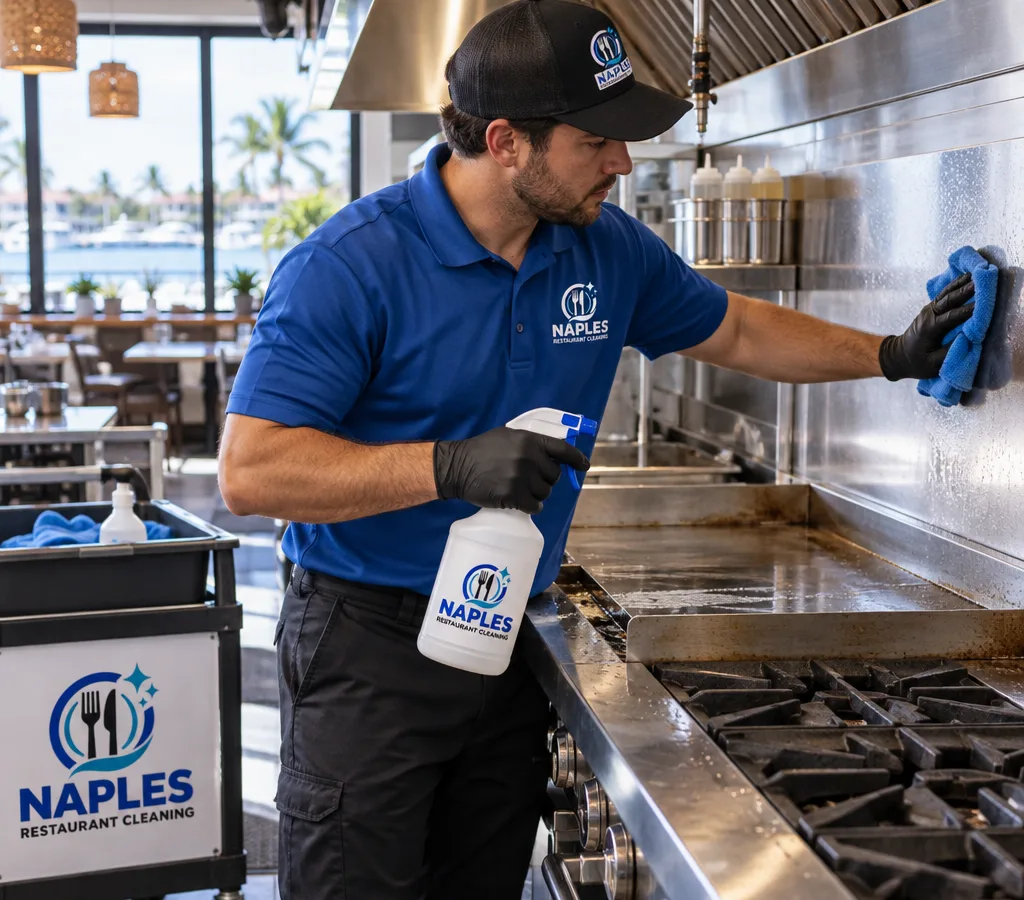
Restaurant Equipment Cleaning · Bonita Springs
Keep your line, prep, and dish areas inspection-ready with detailed cleaning of the equipment that holds grease, carbon, and food soil.
Inspection-Ready Detail Work
Restaurant Equipment Cleaning Bonita Springs is about the places grease and soil actually build up: the undersides, seams, corners, drip edges, wheels, vents, and the floor-contact points that get missed during rush-to-close wipe-downs. Naples Restaurant Cleaning handles detail cleaning for commercial kitchen equipment so your back-of-house stays safer, cleaner, and easier to maintain.
We work around service hours when possible and focus on results you can see and verify, not perfume and shine. For operators who need consistent standards across more than one visit, we document what was cleaned, what needs repair attention—like failed gaskets or broken casters that trap debris—and what to prioritize next time.
From our base at 848 1st Ave N, Suite 5 in Naples, our crews support nearby kitchens that serve the Bonita Springs area, including restaurants and food service operations near busy corridors like US-41/Tamiami Trail and I-75 where volume is high and equipment gets dirty fast. When you want a team that treats commercial kitchens as its everyday work, you are working with Naples' restaurant specialists who know what a cleanable, inspectable setup looks like.
Equipment Cleaning Scope
Every kitchen is different, but Restaurant Cleaning Bonita Springs clients usually want a scope that targets grease, carbon, and food soil on and around high-use equipment. A clear scope also prevents downtime, because we can stage tools, protect nearby prep areas, and clean in an order that keeps the kitchen functional.
Common equipment and areas we clean include:
If a deeper internal clean is needed—for example, a fryer boil-out or a manufacturer-specific disassembly step—we will flag it and confirm what is safe and appropriate for your exact make and model before proceeding.
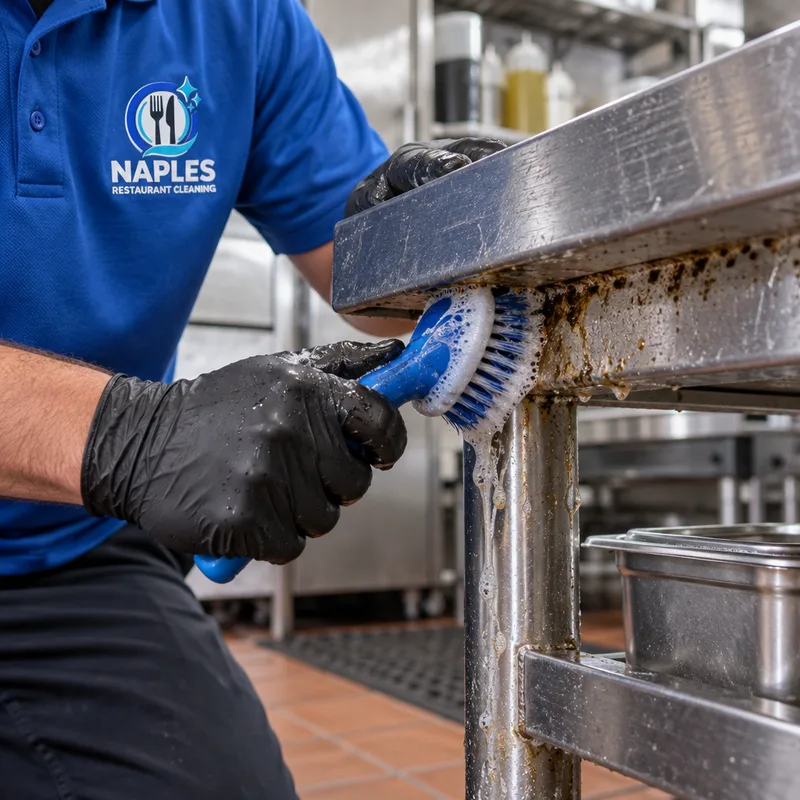
Built For Operating Kitchens
We use commercial degreasers and methods appropriate for kitchen environments, with controlled application, rinse/wipe steps, and attention to overspray near prep and storage.
We focus on the buildup zones inspectors and managers notice: behind equipment, along edges, around control knobs, and where the floor meets equipment feet and mats.
You get a written scope that matches your equipment list and priorities, so the cleaning is consistent visit to visit and easy to verify.
Many restaurants need cleaning outside peak hours. We plan the order of work to reduce disruption and keep key stations usable when possible.
Stainless, painted panels, plastics, and coated surfaces all react differently. We adjust tools and dwell time to avoid damage while still cutting grease.
If a gasket is torn, a panel is corroded, or a surface is pitted, we will tell you. Cleaning can improve hygiene, but it cannot reverse worn materials.
From Walk-Through To Checkoff
We confirm what you want cleaned and what is off-limits, note grease-heavy zones, and identify access constraints like tight lines, fixed gas connections, or low-clearance caster setups.
We set floor protection and control splash and runoff, especially near prep tables, dry storage entries, and dish areas where traffic stays active.
We apply degreaser where needed, use appropriate pads and brushes for the soil load, and work into seams, corners, vents, and base areas where buildup hides.
We remove residue, wipe down surfaces, and focus on high-touch points like handles and control areas. We keep food-contact areas within the correct cleaning expectations for your operations.
We review the cleaned equipment with you, note any access issues that limit results, and suggest a maintenance rhythm that fits your volume.
Transparent Scope Factors
Restaurant equipment cleaning in Bonita Springs typically ranges from about $250 to $900+ per visit, depending on how many pieces are included and how heavy the grease and carbon buildup is. A smaller scope—a short cookline and a few prep exteriors—tends to fall on the lower end, while a full cookline detail with behind/under access and heavy degreasing runs higher.
Price changes with equipment count, soil level, access, required protection and cleanup, and whether you want recurring service. Exact pricing is confirmed after a quick on-site walk-through and a written scope.
Visible Detail Work
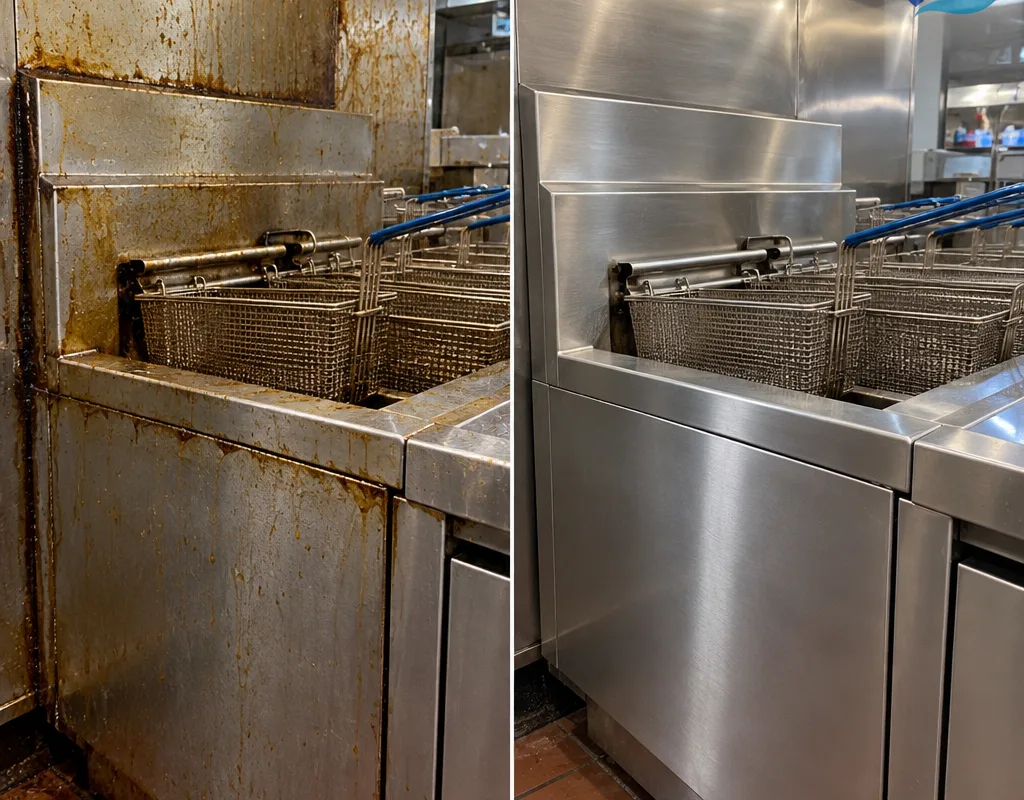
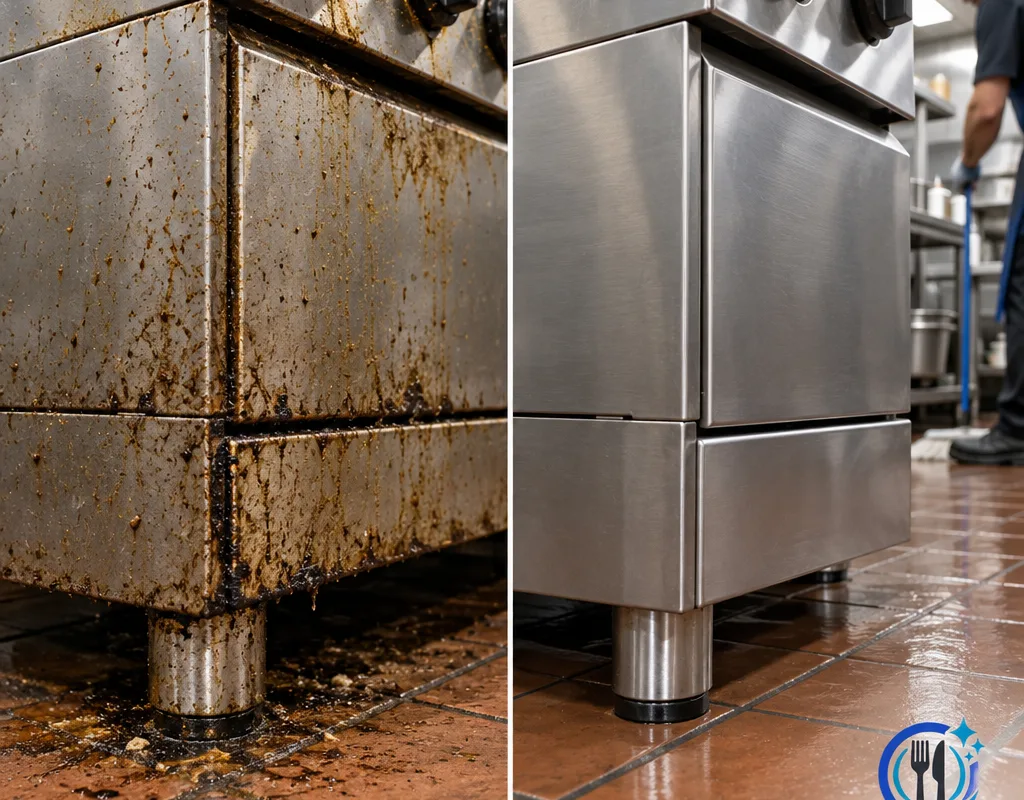
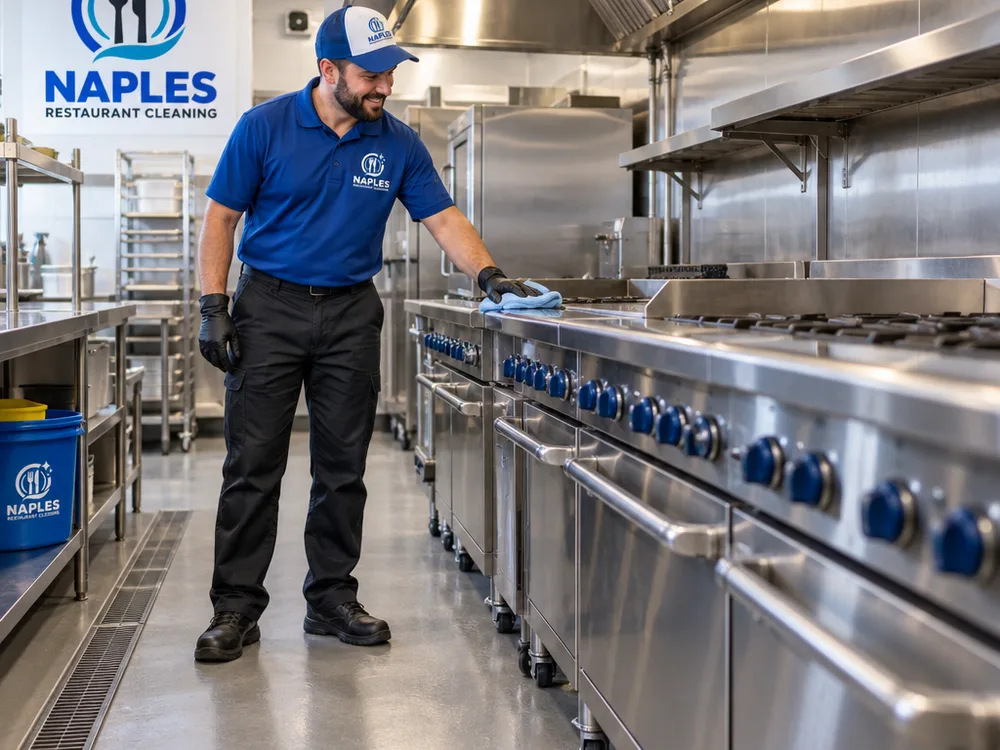
If your kitchen is due for a deep reset, we can build a written equipment-by-equipment scope that matches your layout, hours, and inspection priorities.
Scope, Access & Scheduling
Most kitchens benefit from a recurring schedule based on volume and the type of cooking, with heavy-grease cooklines needing more frequent detail cleaning than low-grease prep areas. A fryer-and-griddle-heavy menu will load grease onto fronts, sides, and surrounding surfaces faster, especially in tight lines where airflow is limited. We can recommend a realistic cadence after seeing your equipment list and how accessible behind/under areas are.
Yes, when it can be done safely and without violating utility connections or manufacturer requirements. Some units can roll out on casters, while others are hard-piped or too tight to move without a qualified disconnect and reconnect. During the walk-through, we confirm what can be moved, what needs partial access tools, and what should be scheduled with your service vendor so the area can be cleaned properly.
Equipment cleaning focuses on the appliances and surrounding surfaces, while hood and duct cleaning is a separate, specialized scope with different access and compliance requirements. If your buildup suggests the exhaust system also needs attention, we will point it out and coordinate the timing so cookline detailing and exhaust work do not duplicate effort.
It should not when the right chemical, dwell time, and tools are used for the finish. Stainless can scratch if aggressive pads are used in the wrong direction, and labels can lift if soaked or scraped. We adjust method by surface type and avoid harsh abrasion on brushed stainless, painted panels, and plastics while still removing the grease film that attracts more soil.
Yes, many restaurant cleaning scopes are scheduled outside peak service windows to keep the kitchen running. Availability depends on the size of the scope and how many stations must be offline at once, so the best first step is sharing your preferred days and times and the equipment list so we can plan the order of work.
Clearing counters, removing loose items from shelves near the cookline, and confirming what equipment can be moved helps the cleaning go faster and more consistently. If there are known restrictions—locked panels, sensitive equipment, or a station that cannot be shut down—tell us in advance so we can set the scope around it instead of discovering it mid-clean.
Tell us what equipment you want included and when you can pause stations. We will confirm access, build a written scope, and schedule a plan that fits your service hours.
Talk With Our Team
Tell us about your restaurant, schedule, and problem areas. We will help you define a practical cleaning scope.
Request a Quote
After you submit the form, our team will review your needs and follow up to discuss the space, schedule, and next steps.